SEL in your school, measured — not guessed.
Run social-emotional assessments across every class on IMPACT. Student, parent and teacher views come together in clear reports for each student, section, class and the whole school — with baseline-to-endline growth and evidence ready for the Holistic Progress Card.
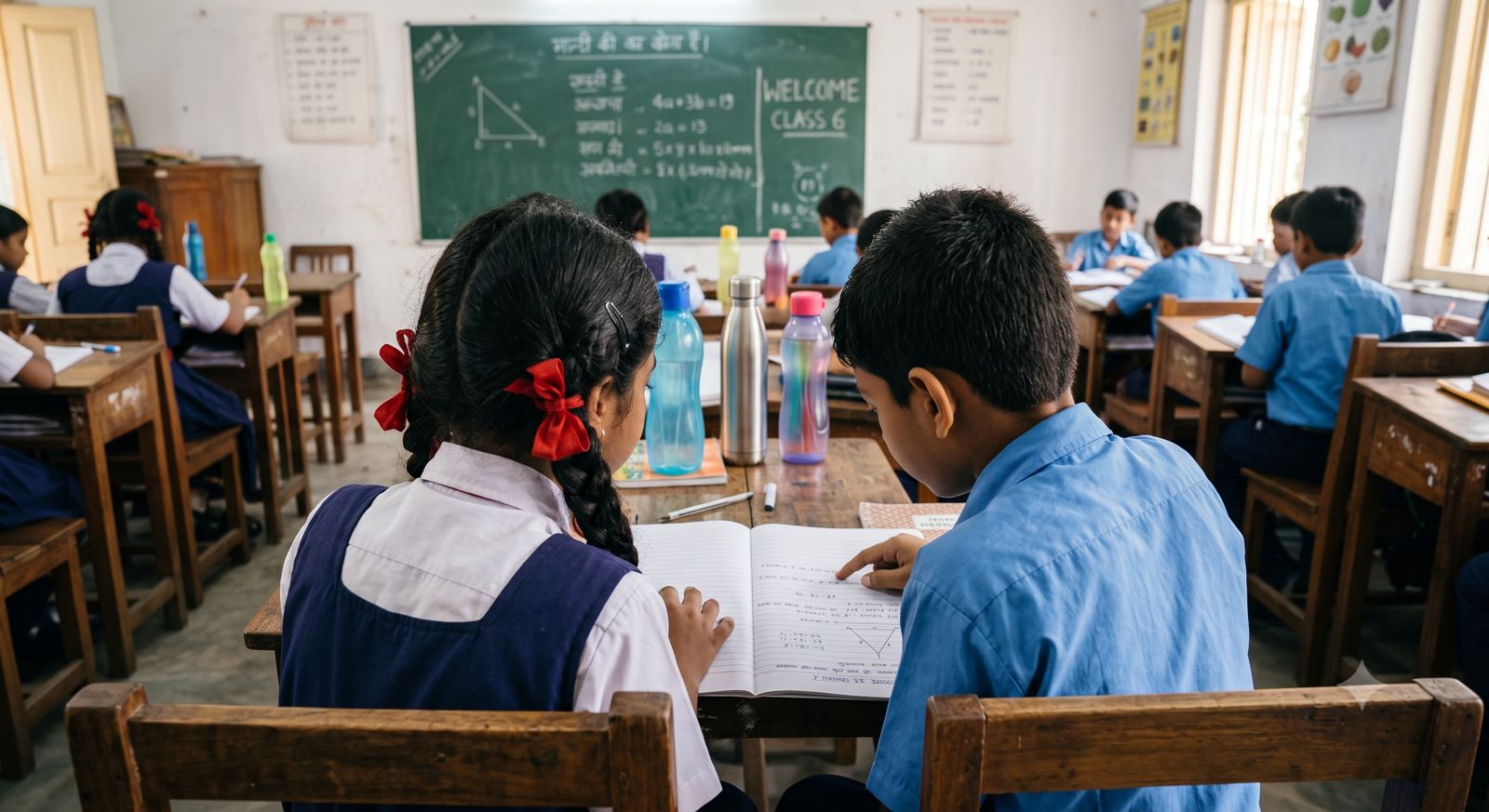
The child, the parent, the teacher — one report.
SEL looks different at home, in class and in a child’s own mind. Our programme brings all three together, the way our logo’s three figures form one pencil.

From one child to the whole school.
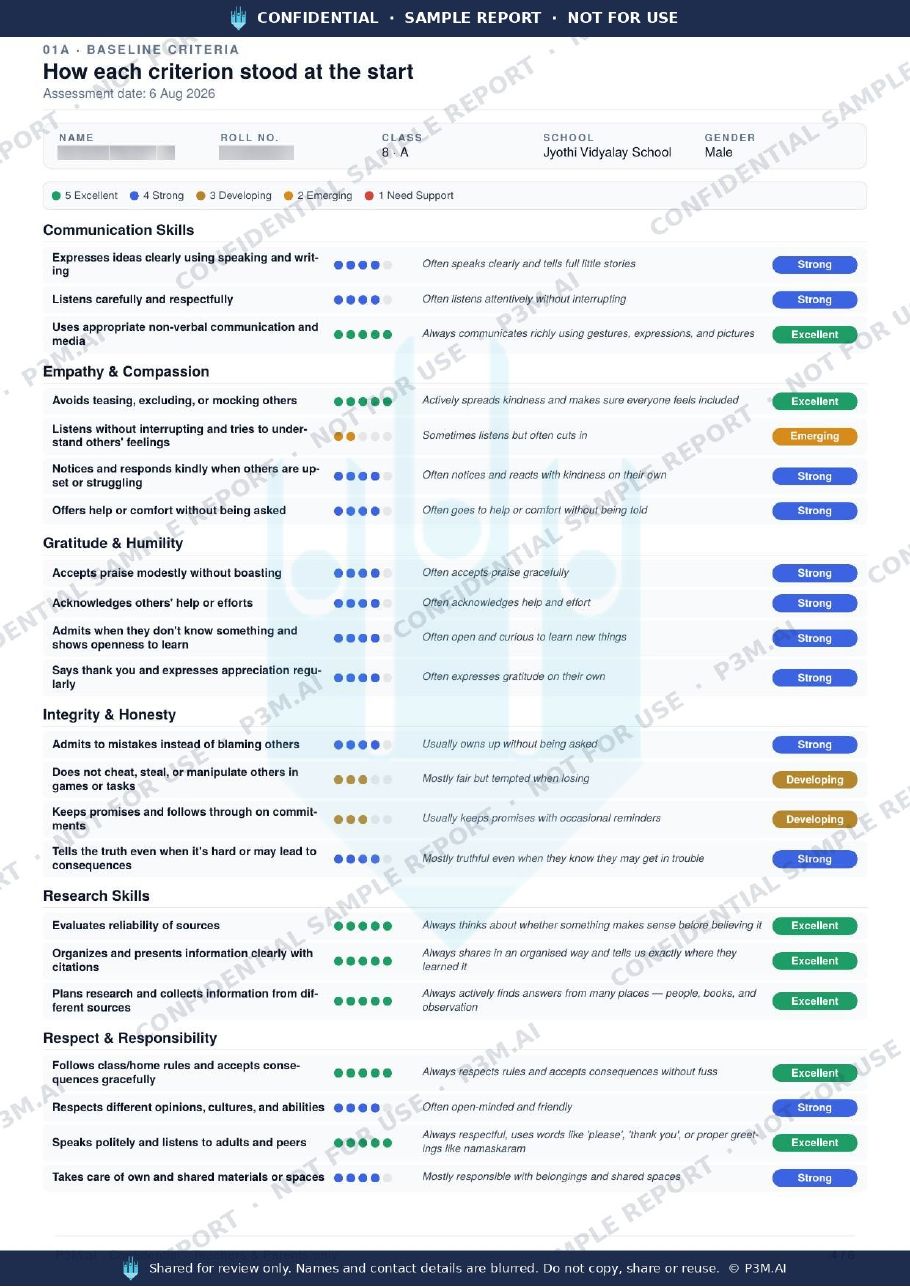
A six-page report: strengths, next area to grow, activities, and section and school percentiles.
Which skills the section shares, who needs support on which criterion, and what to practise next.
Patterns across sections of a grade, so programmes can be targeted where they are needed.
The whole-school SEL picture, growth over the year, and evidence for the HPC and your board.
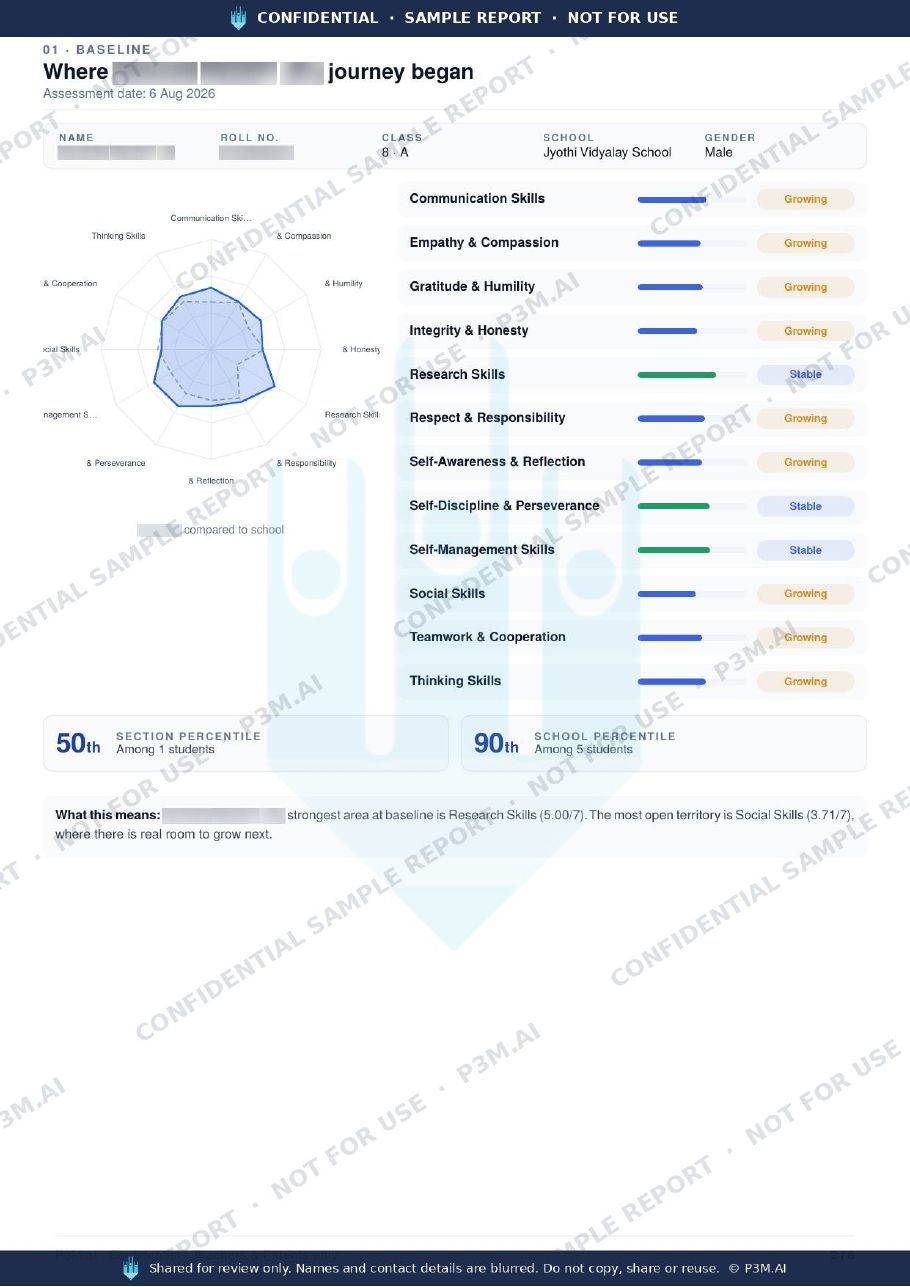
One academic year. Growth you can show.
Start with one class, one term — or the whole school. Every cycle re-measures the same criteria, so growth is measured on matched students and reported with effect size, not assumed.
Students, parents and teachers complete their assessments. Reports go out within days.
Teachers and parents use the recommended activities; weak criteria become tracked tasks in IMPACT.
The same criteria are re-measured on the same students.
Before-and-after on matched students, reported with effect size — not just averages.
In February 2026, CBSE asked schools to integrate SEL into daily teaching and keep annual records of their wellbeing work. Self, parent and teacher views on every SEL criterion give you that record — and the 360-degree socio-emotional evidence NEP 2020’s Holistic Progress Card asks for, in language parents understand. Foundational-stage versions are aligned to NCF-FS.
Vivekananda Institute of Values, Ramakrishna Mission Gurugram, used IMPACT to baseline 3,000+ students pan-India — the same engine behind sel.p3m.ai.
Read the case study ↗Pay per report. No platform subscription.
Schools pay only for the reports they receive. Section, class and school roll-ups are included. Volume pricing depends on student strength, classes covered and whether you add parent and teacher views.
What school leaders ask us.
All of them. Students in Classes 3–10 take the self-assessment today, and teachers can observe at every level. A parent version covering kindergarten upwards is coming soon.